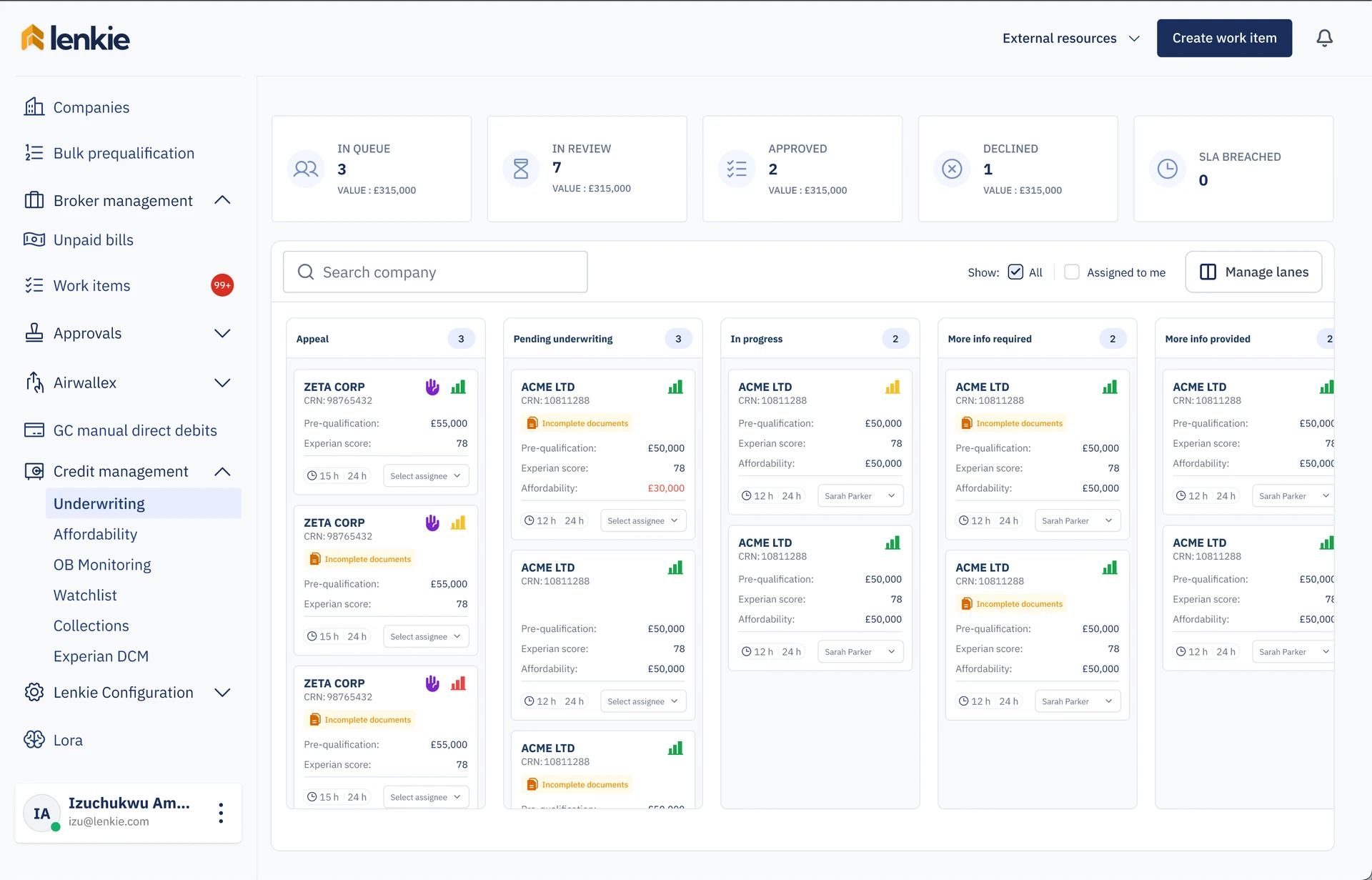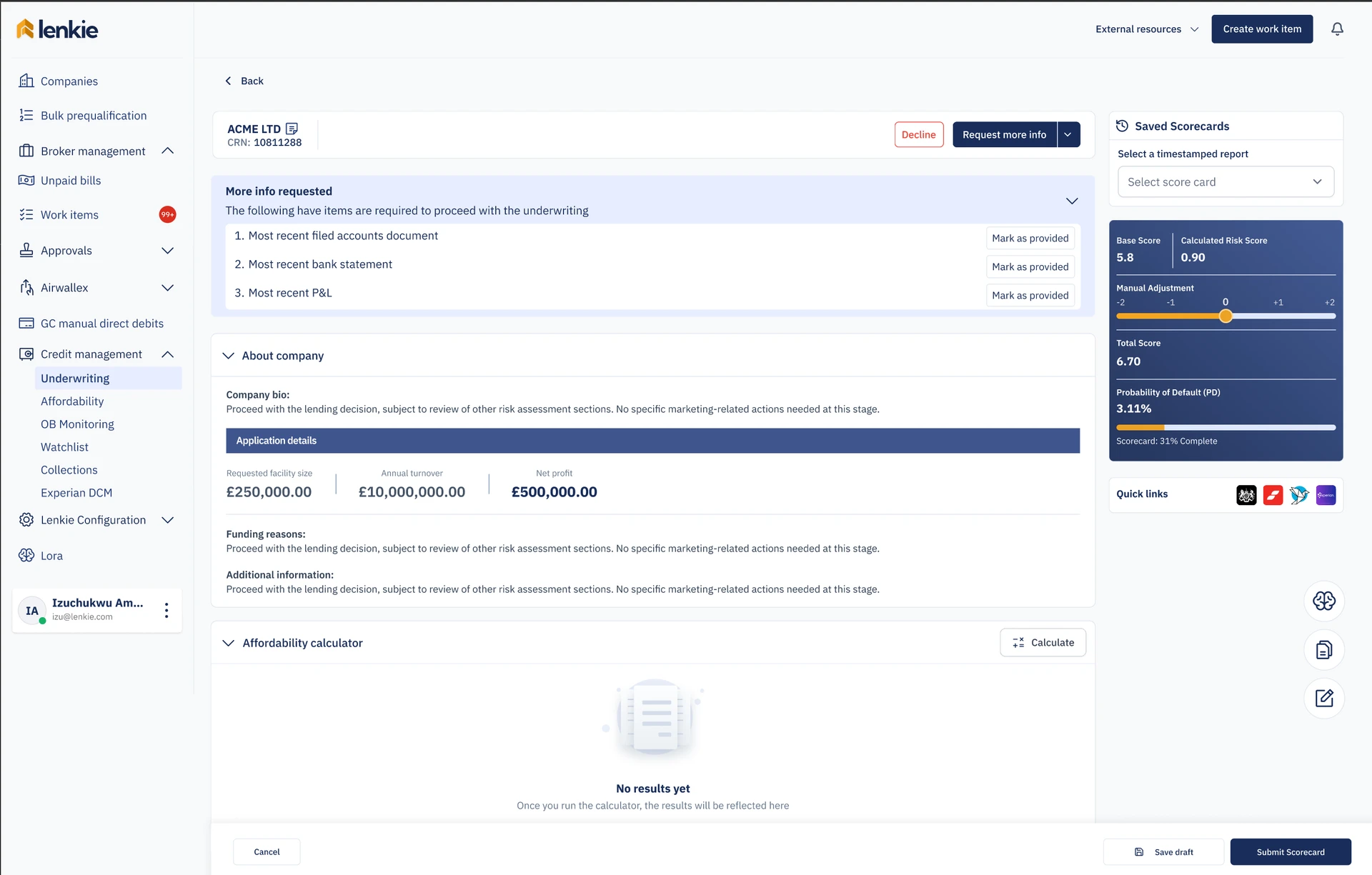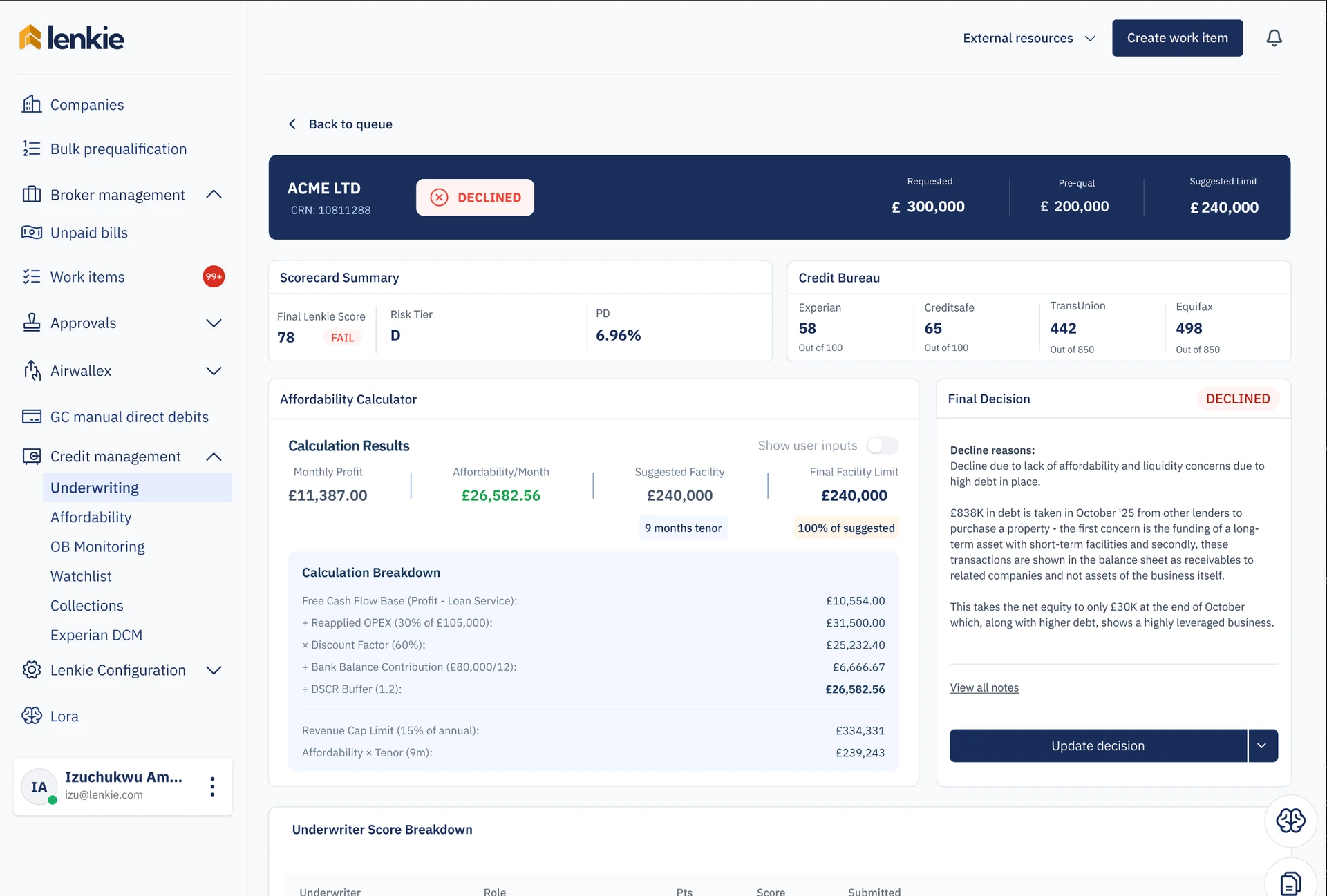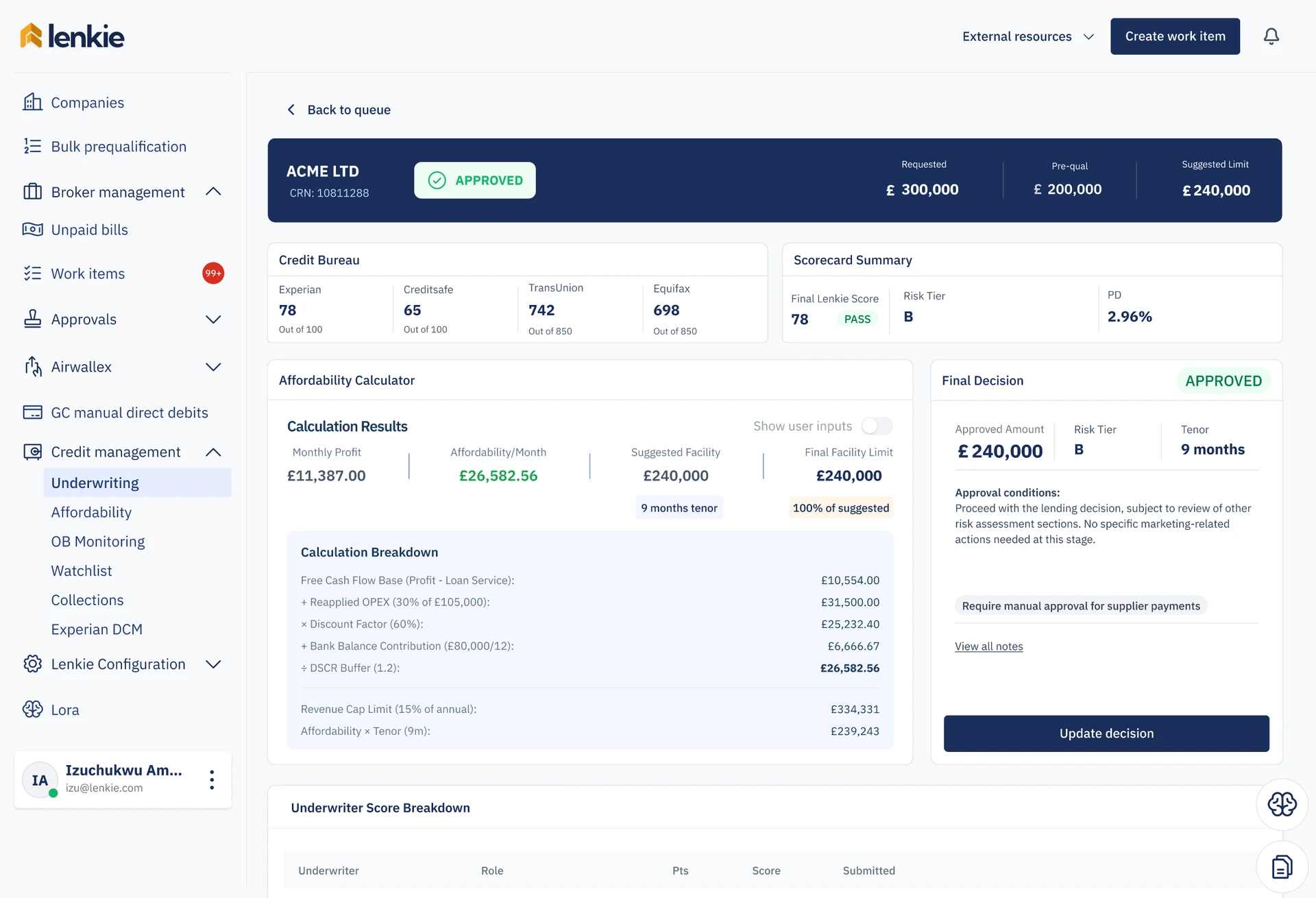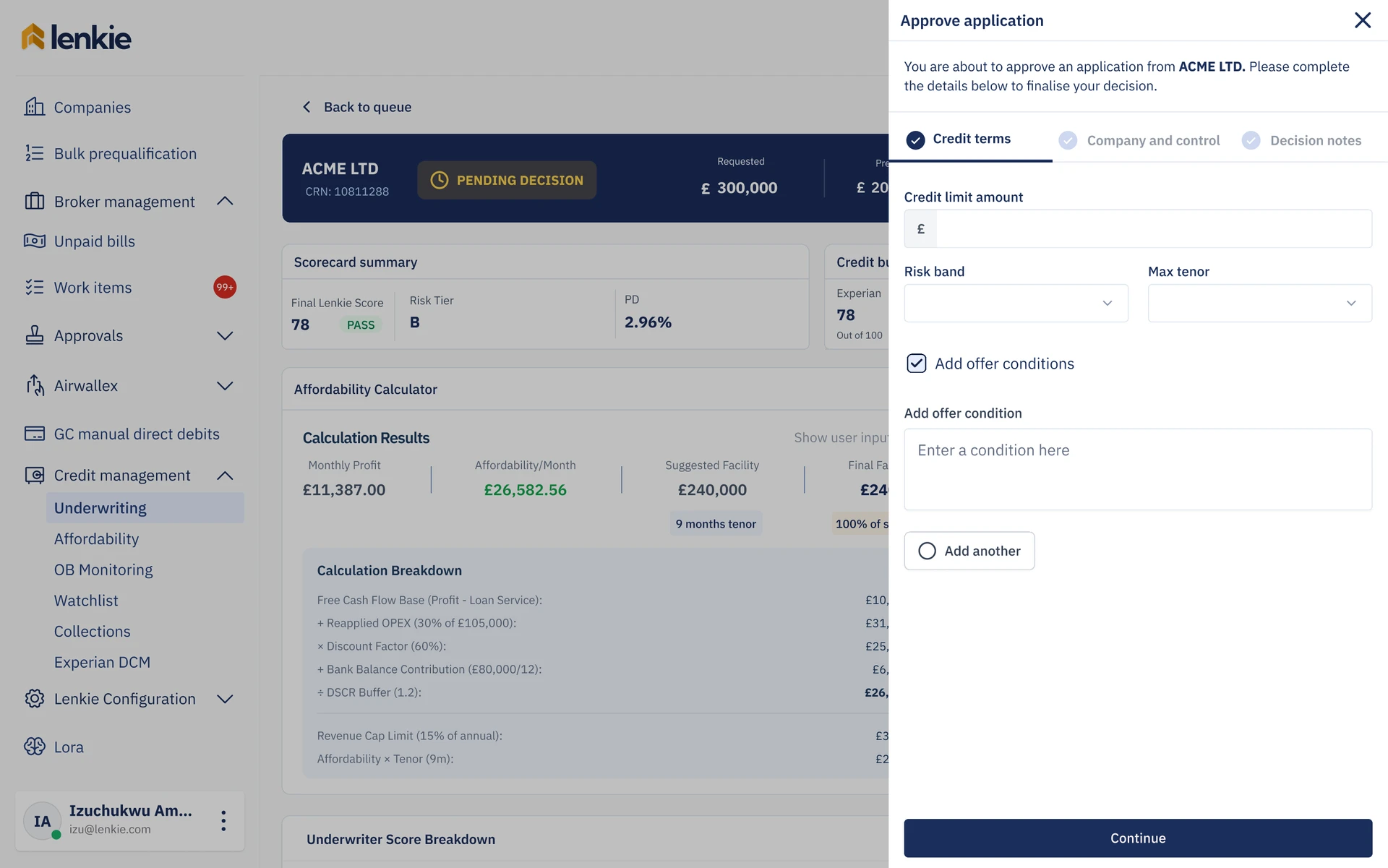

Lenkie credit underwriting dashboard with review queues and application statuses

Product design · 2026

40 hours to 23: Redesigning credit underwritingfor faster, more defensible decisions

Lenkie Technologies

My role:Lead Designer

Project overview

The project at a glance.

Company context

Lenkie is a UK fintech platform for business credit and bill management. Its underwriters needed a shared way to review applications.

The solution

I led the information architecture and UX workflow, connecting assessments, affordability, ownership, notes and risk information into one workspace.

The product team brought the workspace to life. Feedback from Sales and Risk helped us refine the experience.
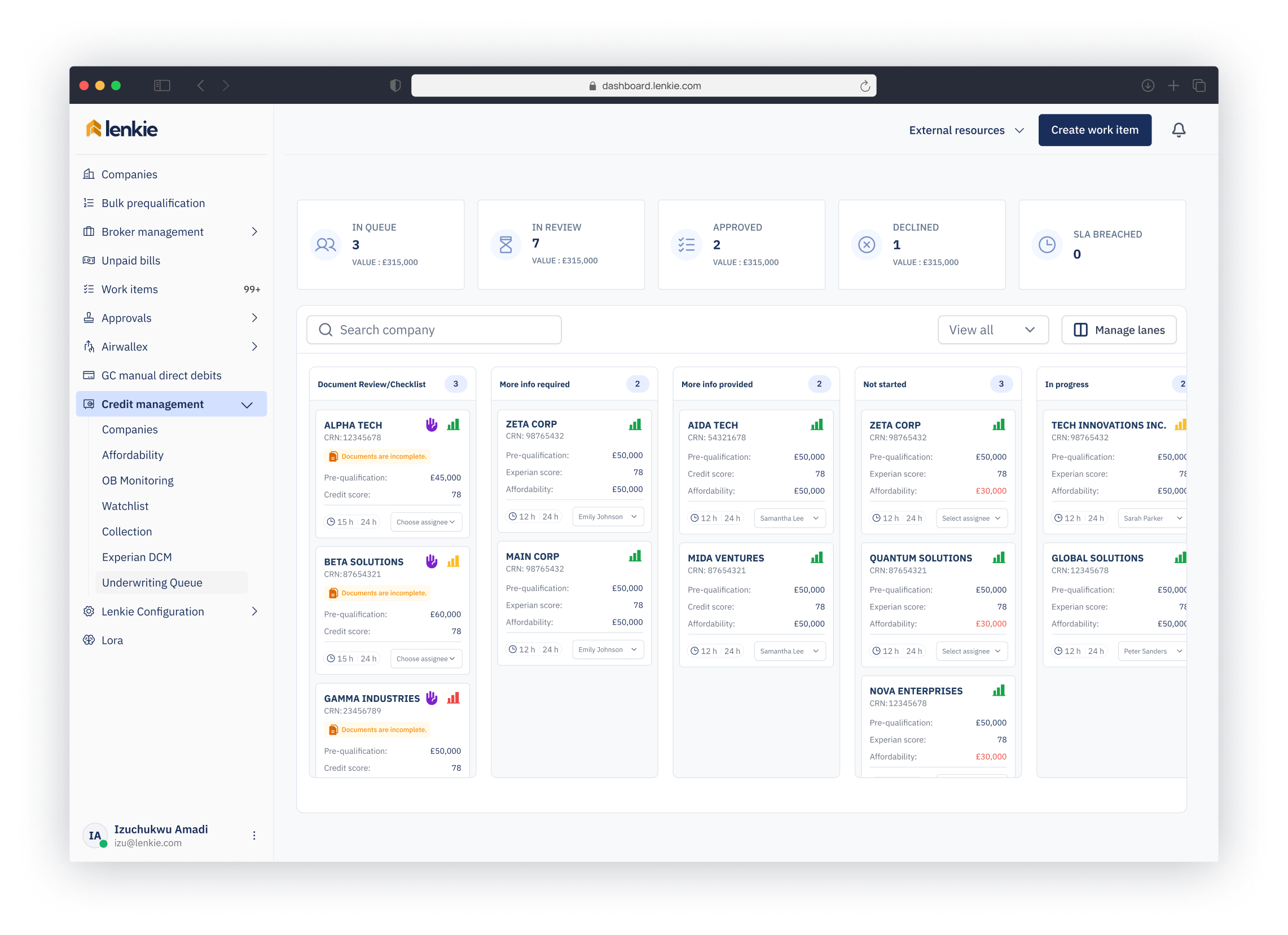
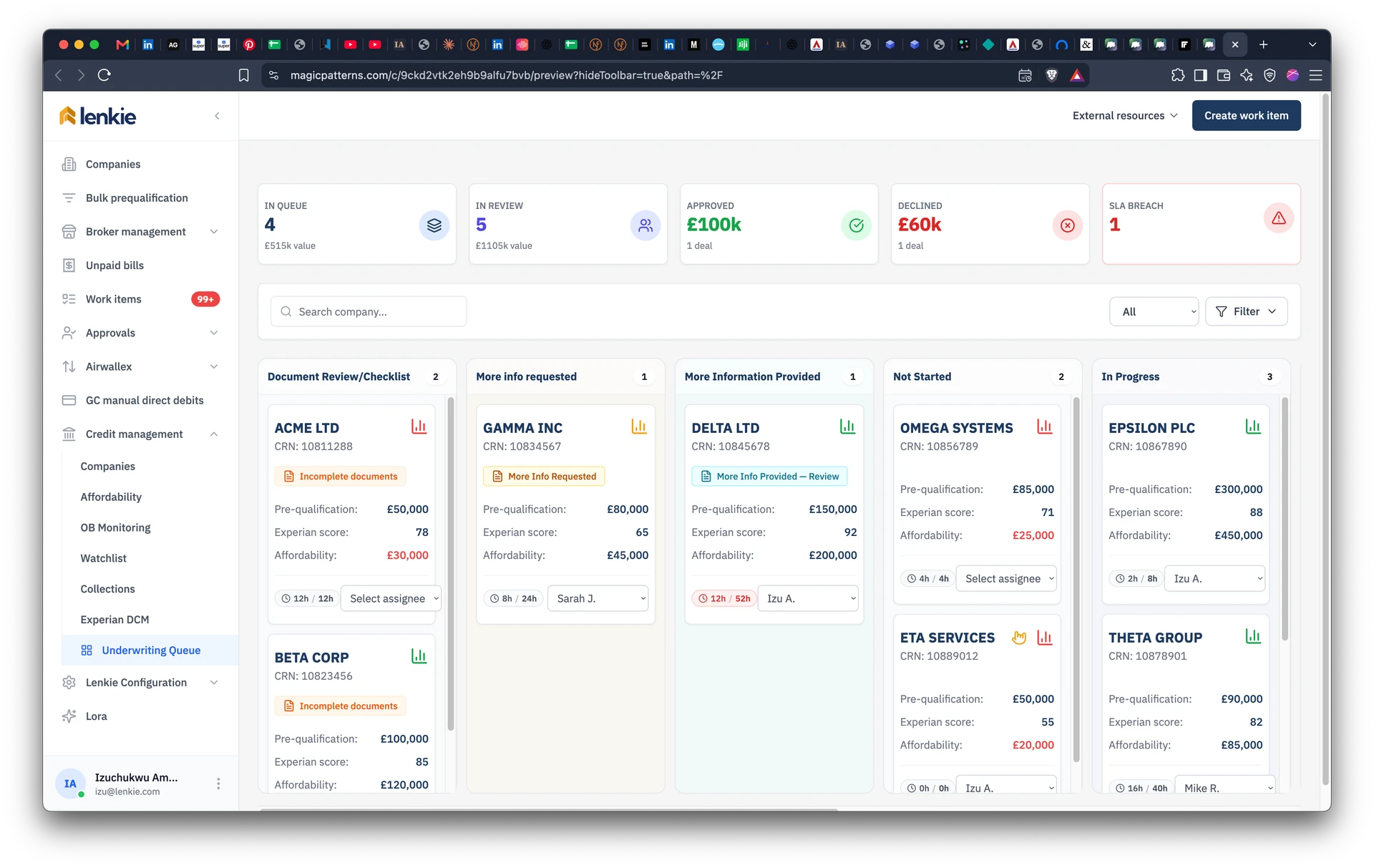
Lenkie credit underwriting dashboard with review queues and application statuses
The underwriting workspace, with review queues and application statuses.

Median time to YES

40H → 23H

Median time to NO

42H → 17H

Disbursement halted

£200K

Decision times: February → March 2026.
The old workflow

One application.
Several places.

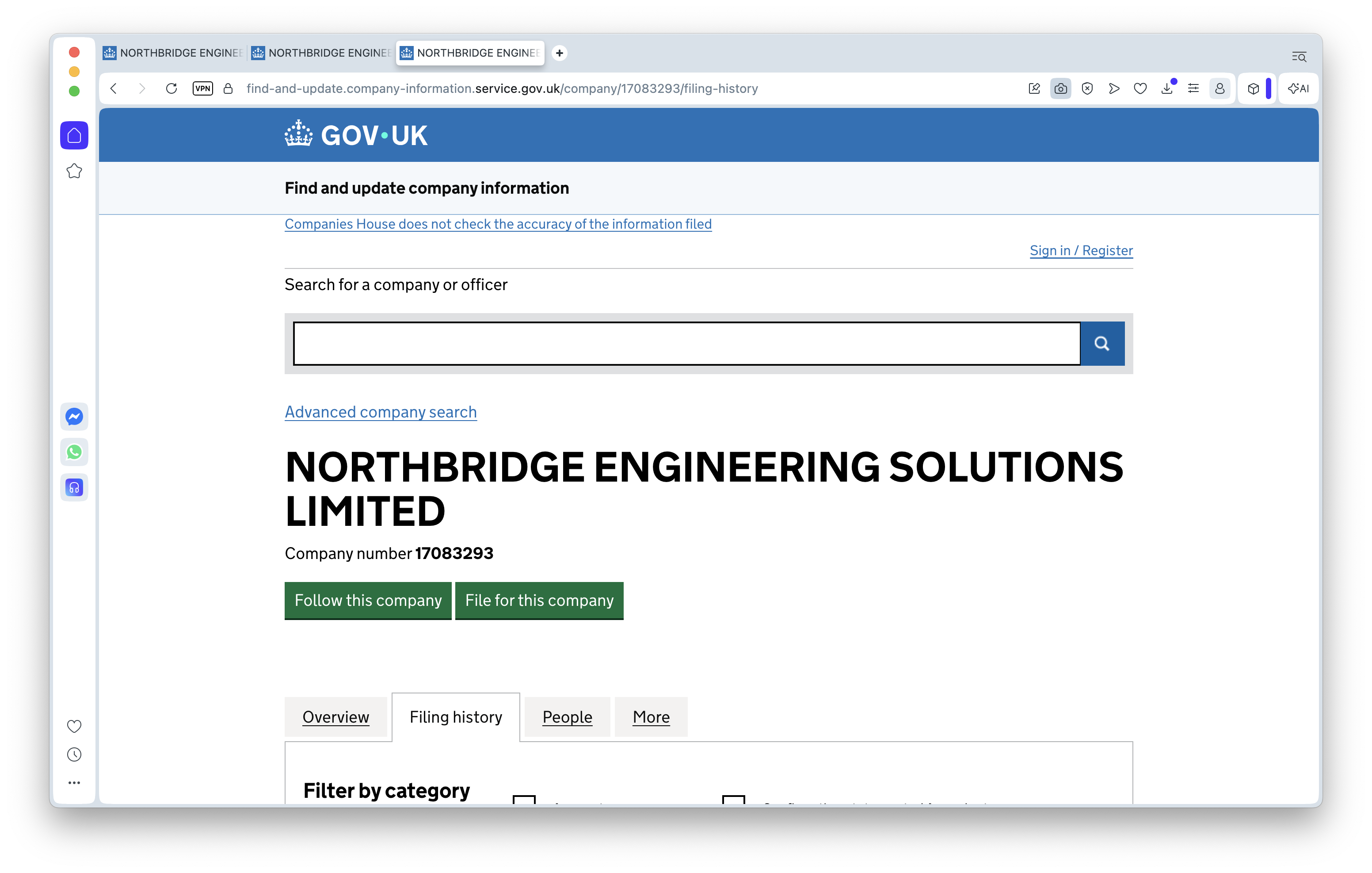
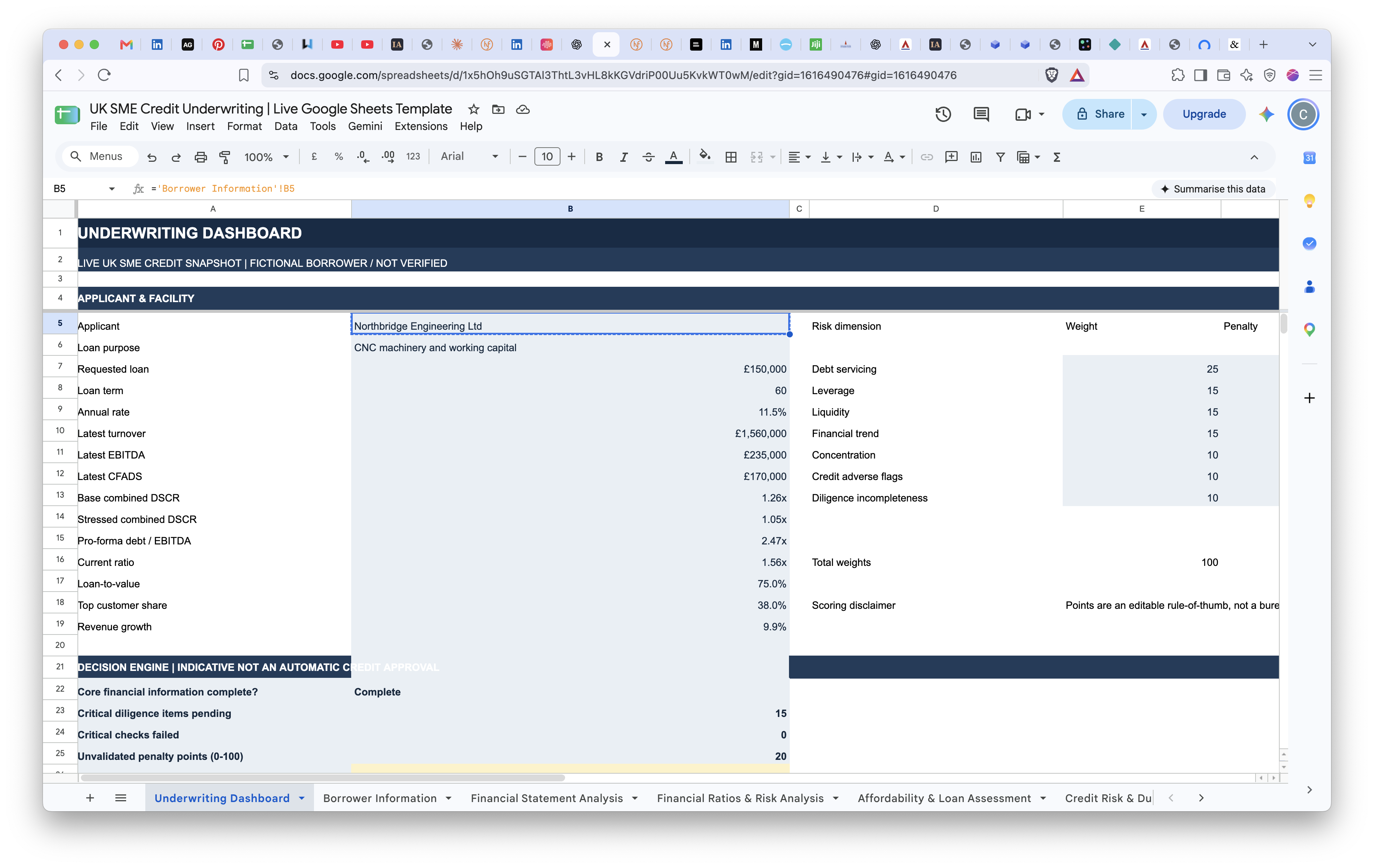
Reviews were split across browser tabs, spreadsheets, notes and Slack, with no shared process or clear ownership.

Company records
Companies House company record open in a browser with several research tabs
Spreadsheet review
An illustrative underwriting spreadsheet with borrower information, financial ratios, affordability and outstanding diligence checks
“We need underwriters to see everything they need before they start, work through a consistent process, and arrive at a decision they can defend.”
Johannes Bouse · Head of Risk at Lenkie
Research

Start with how
people already work.

I worked with the Head of Risk, the CTO and underwriters. Their checklists and notes helped me understand what the product needed to support.

Private checklists

A shared scorecard

Bring the assessment into the product.

Conversations in Slack

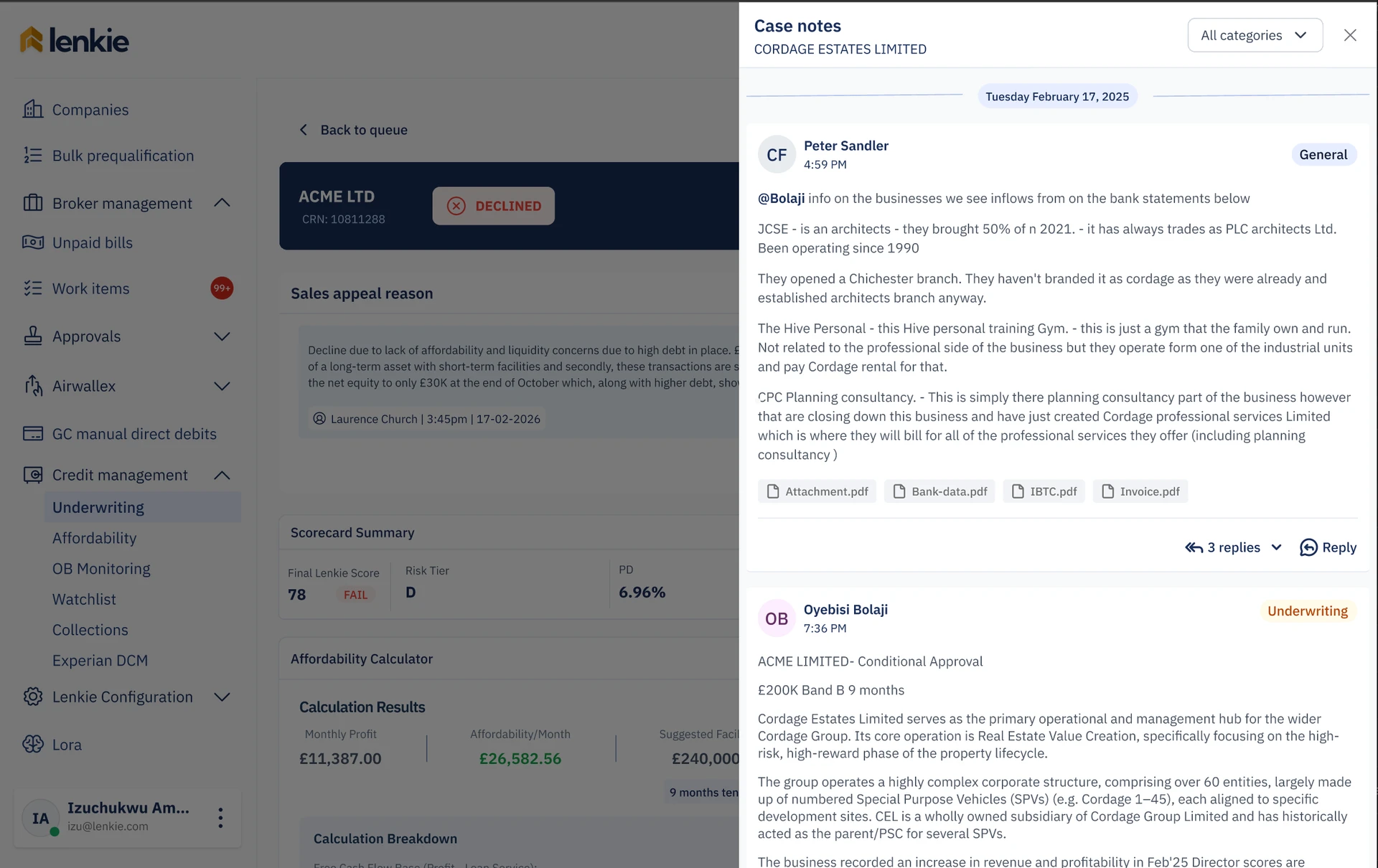
Threaded case notes

Back-and-forth was hard to track. Threaded notes kept it with the application.

Unassigned deals

Visible ownership

Show who owns each application.

Design decisions
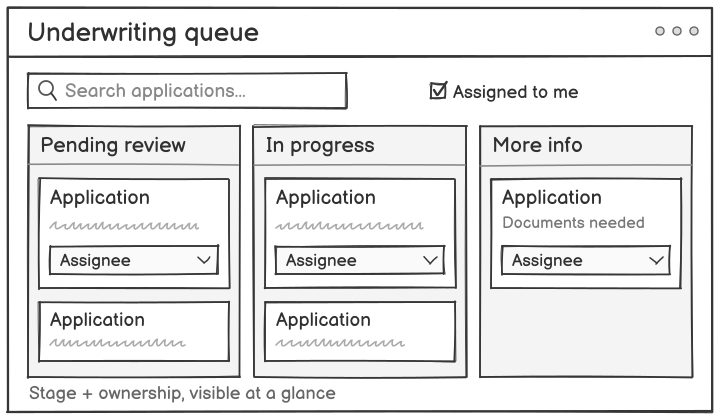
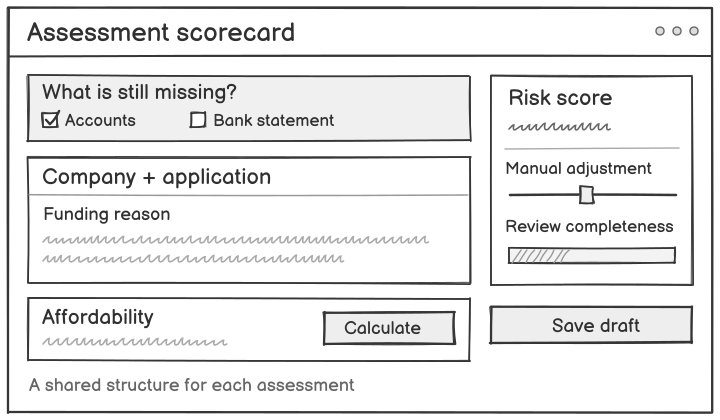
Recreated review-lane concept: application stages, document status and assigned reviewersRecreated scorecard concept: missing documents, company context and affordability beside risk scoring
Exploring the assessment structure and review lanes.
Recreated wireframes.

Structure, with
room for judgement.

The scorecard gave underwriters a consistent way to document their assessments, while leaving room to explain the circumstances behind each recommendation.

Make ownership visible. Pipeline lanes showed who owned the deal.

Surface what needs attention. Completeness checks highlighted unfinished reviews; AI risk information appeared before the review began.

Exploration and delivery

Make it tangible.
Review it together.

Magic Patterns is an AI-powered, code-assisted design tool. I used prompts to build an interactive prototype that helped the Head of Risk clarify his thinking.

Early underwriting queue prototype in Magic Patterns, before refinement using the Lenkie design system
Magic Patterns prototype
Refined underwriting queue using the Lenkie design system, with application lanes and assigned reviewers
Lenkie design system
Design and engineering

Connecting the experience.

Izu Amadi

Information architecture & UX

Queue
Assessment
Decision
AffordabilityCase notesRisk context

I designed the information architecture and UX workflow, connecting the required features into a coherent underwriting experience.

Remy Dike

Affordability and notes

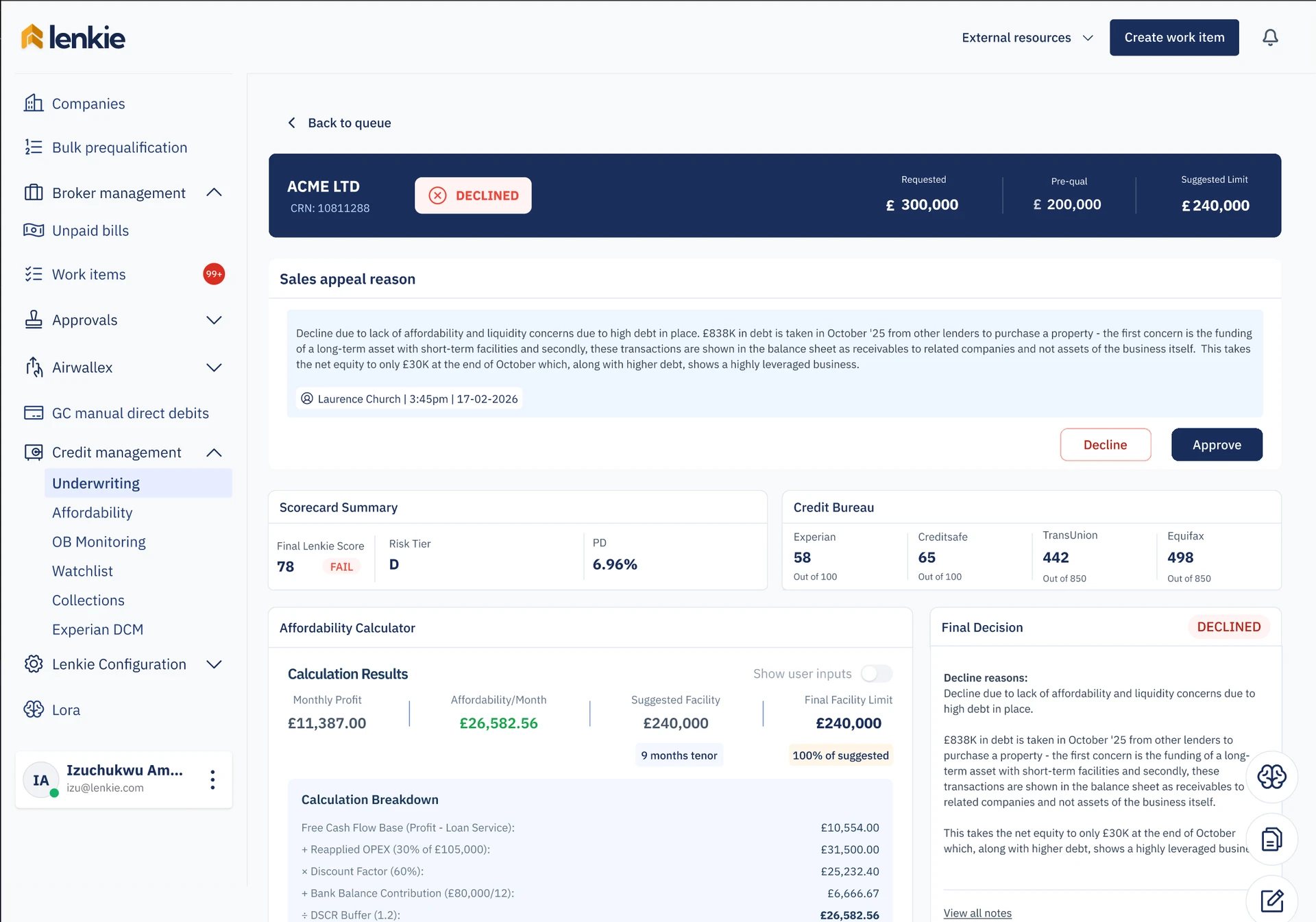
Affordability
Threaded notes

Remy designed loan affordability and threaded notes, bringing internal discussions into each application.

With the engineers

Check feasibility together.

I presented ideas to engineers to agree on the approach, work through the problems and check what was feasible to build.

Design
Review togetherAgreed approach
Engineering
Managing scope

New ideas.
The same deadline.

New ideas kept arriving while the original deadline stayed in place. We negotiated a shared timeframe to build, ship and test the milestones we had already agreed.

Agreed milestone

Build

Focus on the agreed milestone.

Ship

Release the work for testing.

Test

Use the findings to guide the next priorities.

Learn, then agree the next milestone
Reported outcomes

Decisions took
less time.

Median decision time
February → March 2026

TIME TO YES

40HFebruary
23HMarch

TIME TO NO

42HFebruary
17HMarch
Reflection
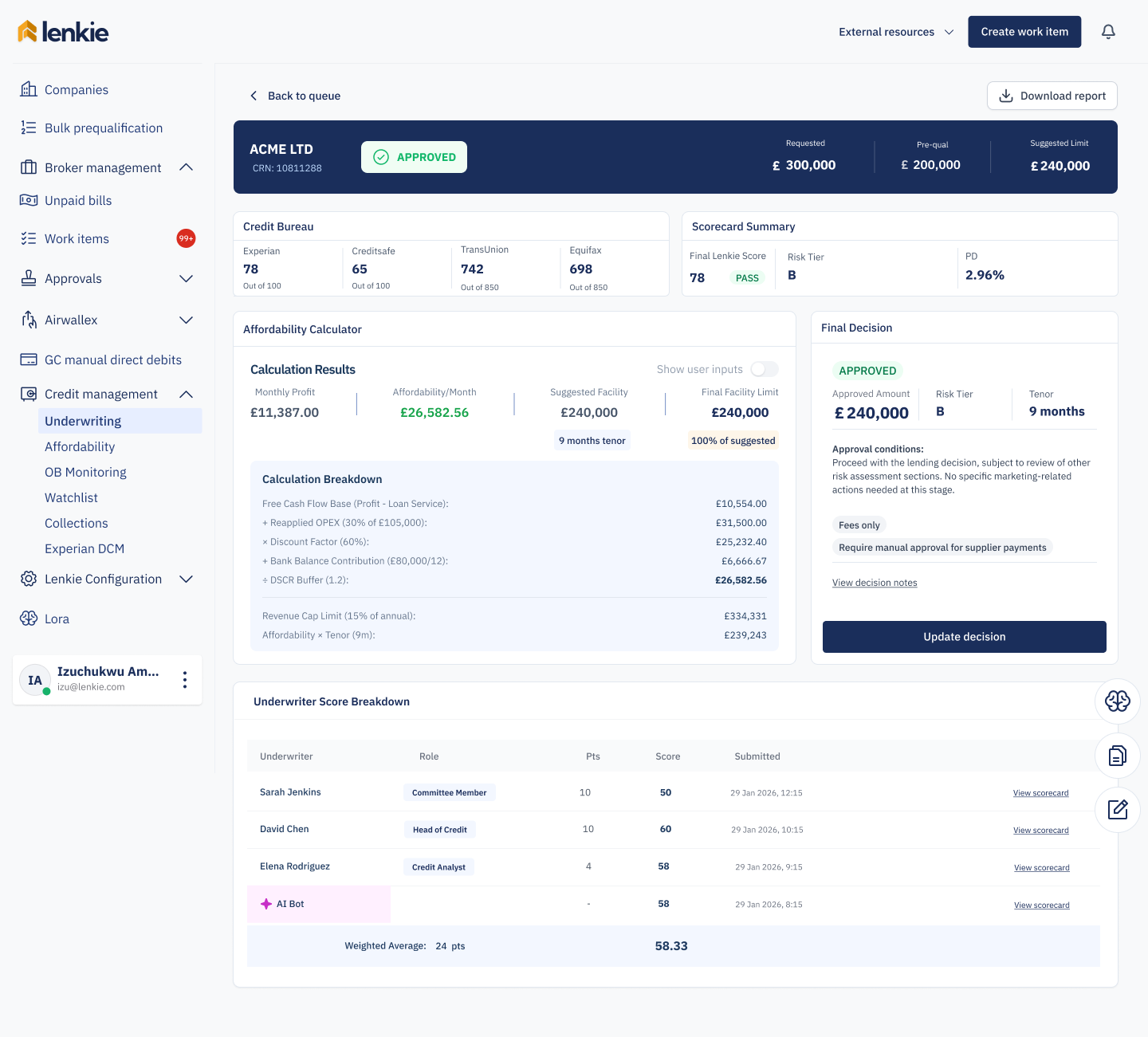
Lenkie completed assessment showing the credit bureau, scorecard summary, affordability calculation, final decision and individual reviewer scores
View full image

A clearer review. Not just a faster one.

Reducing turnaround time mattered. So did helping reviewers see who owned the application, what was missing and which risks needed attention before making a decision.

The product team brought it to life. Feedback from Sales and Risk helped us shape it around the people using it every day.

Up next

Building institutional trustthrough strategic brand evolution

OPay · Branding · Product · 2025

Next project in 10 seconds